Case study
Beyond compliance: How Framery's 8-week CSRD Double Materiality Assessment fueled organisational learning
Leveraging Upright, the soundproof booth manufacturer found an efficient and data-driven approach that provided key insights beyond mere reporting.
Published Feb 26, 2024
€154M
98
1
Starting point
How to conduct a CSRD Double Materiality Assessment with very limited internal resources while generating insights for strategy and decision-making? In early 2023, Framery, the world’s leading manufacturer of soundproof pods, booths and privacy solutions for workplaces, found itself faced with this challenge.
Unlike large listed companies, Framery was not in a rush to perform the Double Materiality Assessment. As a leader in sustainable initiatives within its industry, they aimed to be well-prepared in advance, gaining a holistic understanding of the big picture and identifying material topics relevant to their business. This approach would enable them to map the focus areas of their sustainability strategy for the upcoming years. From the CSRD perspective, it would also prioritize the most material ESRS topics to focus on when CSRD reporting becomes a priority in 2025.
We wanted to understand holistically the value we create and the resources we use. The double materiality assessment along with net impact quantification provided us with that big picture.

Solution: Science-based Double Materiality Assessment in 8 weeks
It was evident for Framery to prefer a data-driven approach to Double Materiality rather than relying solely on stakeholder insights, as they wanted the assessment to be based on scientific information. Following a market analysis, Upright's data-driven approach convinced Noora Jukkola: “In addition to being data-driven, another crucial aspect was the lean and flexible mindset of Upright. The process appeared straightforward and clear, without compromising the quality of the assessment”, she says.
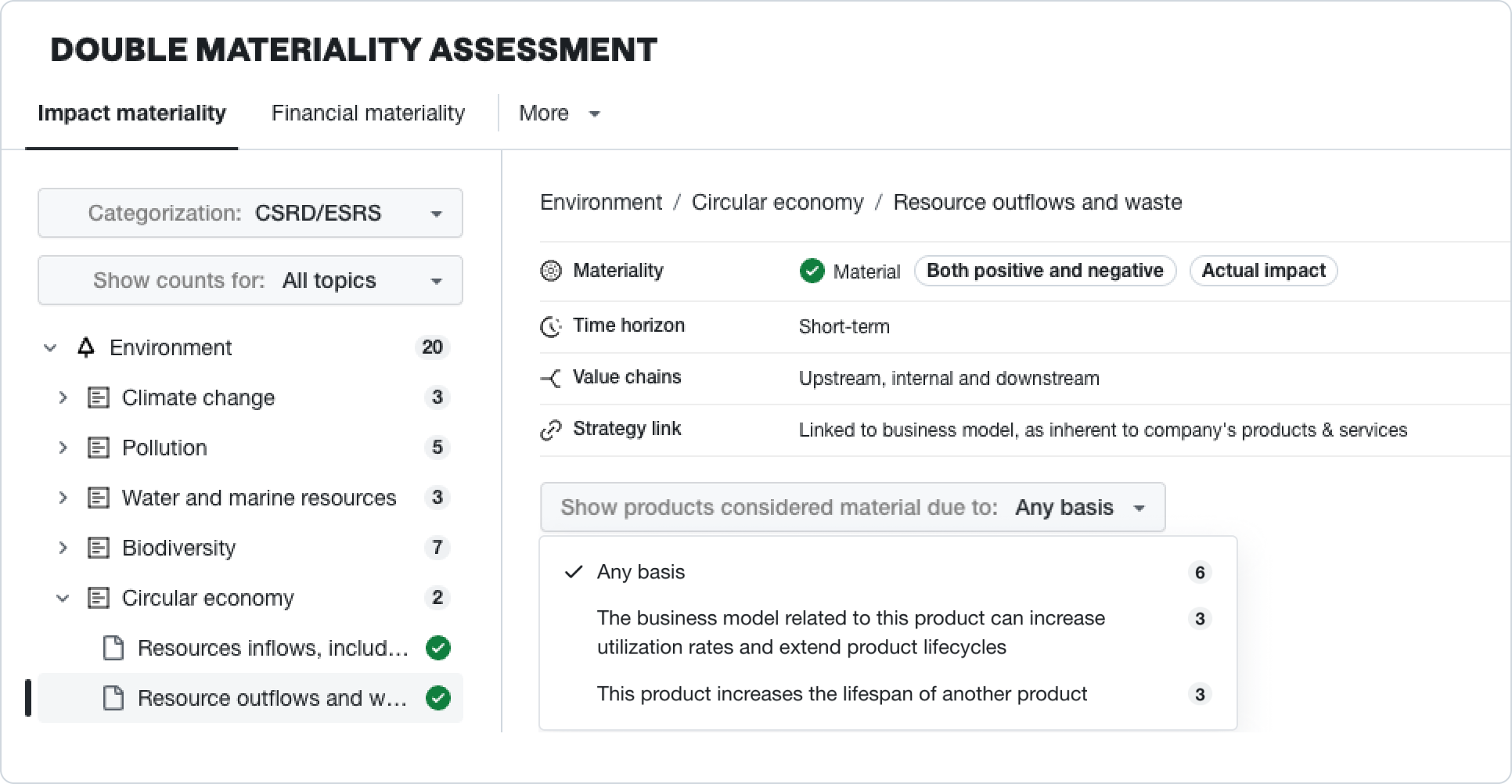
Moreover, the final deliverables of the assessment were in a format that allowed for a clear understanding of the material topics and the reasoning behind the materiality. This supported Framery in the ongoing strategy work in addition to the regulatory reporting.
The 8-week assessment comprised of:
- A kickoff to determine Upright's data requests from Framery
- A mid-review to discuss initial results
- And a final review, which included presenting the final assessment results to a larger audience opening up and explaining the context of the data.
Results: Basis for CSRD reporting and a solid foundation for sustainability strategy
In addition to conducting a science-based Double Materiality Assessment and being prepared to execute the first CSRD report, Framery now has a clear understanding of all material topics for their business.
The assessment did not require extensive background research or other manual work, allowing the Double Materiality data to be available shortly after kickoff. Additionally, Framery found great value in the open and analytical way that the Upright team explained the most important data findings and context for the data in the review session.
“The process increased Framery's organizational understanding of our material topics and created new information that is based on scientific data. The environmental and social impacts of our business are not a matter of opinion – they are based on factual evidence”, says Noora Jukkola.
February 26th, 2024
Upright Project
Share: