News
Upright opens its net impact database for the public to increase understanding of real-world impact of companies
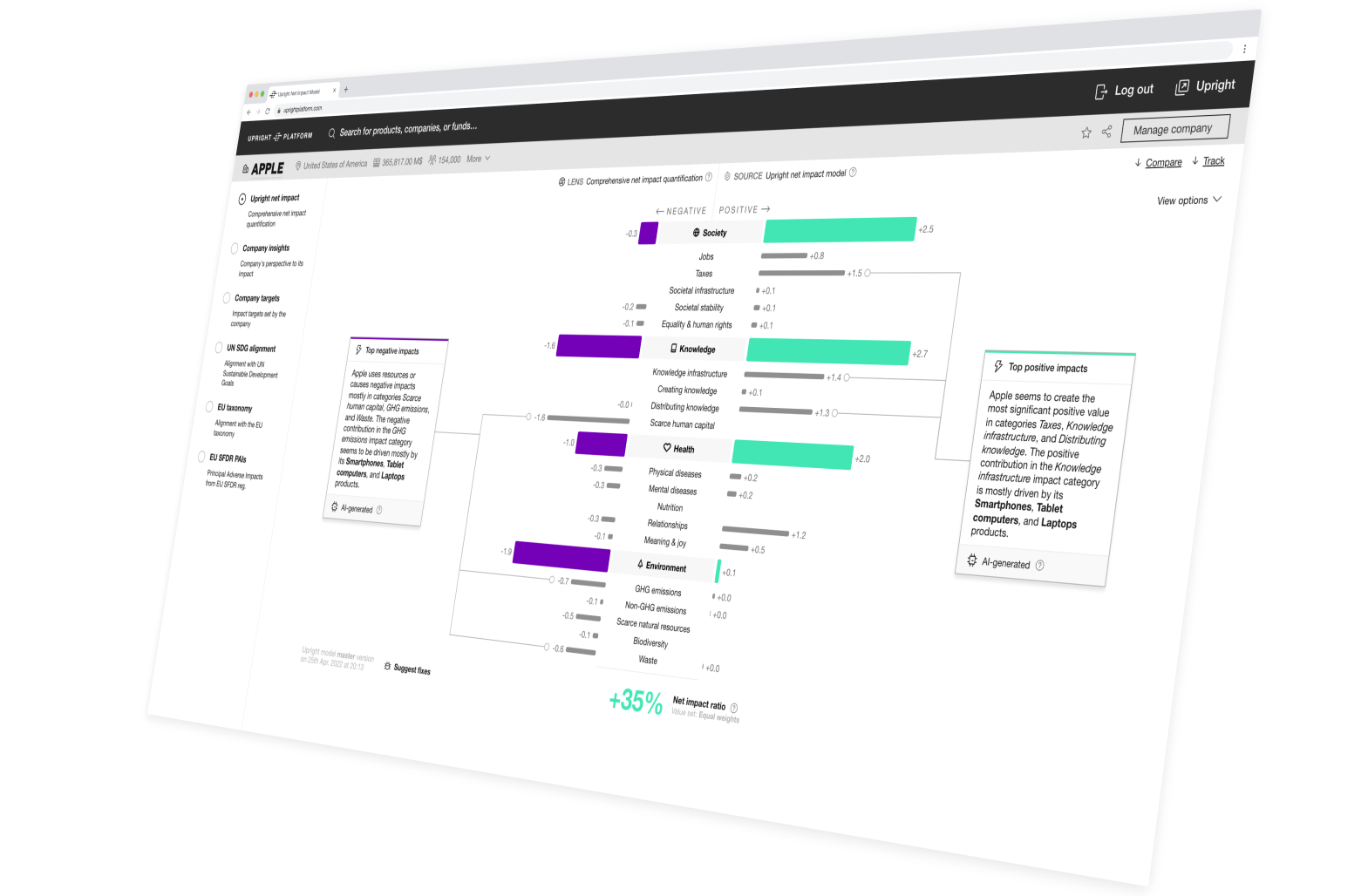
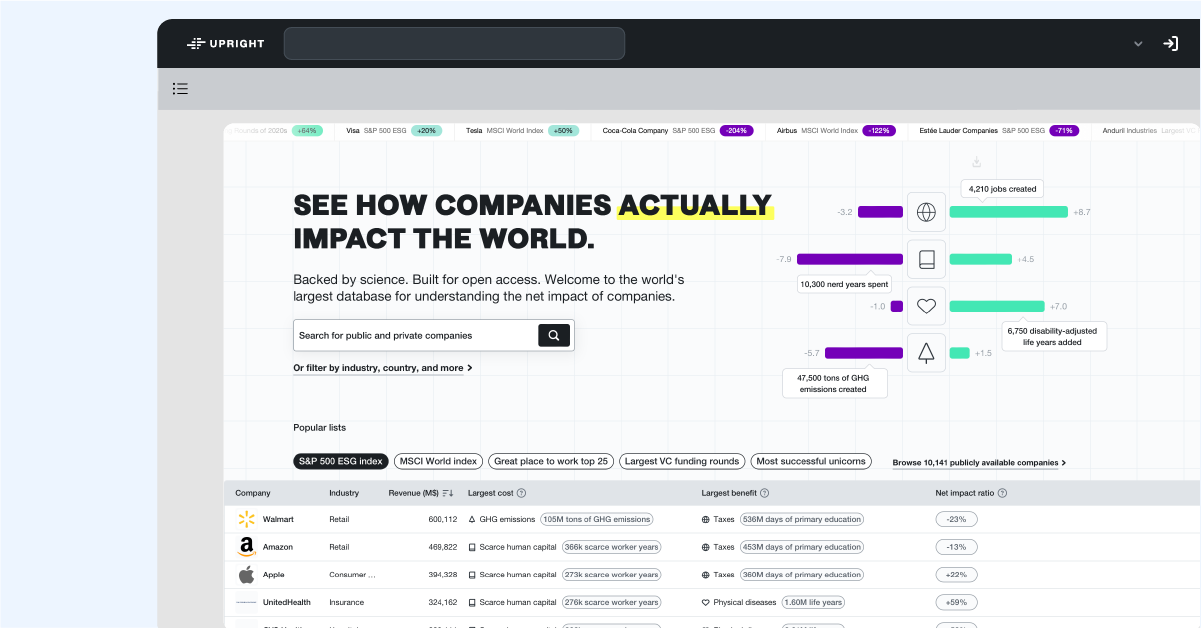
The gradual opening starts today with the first batch of 10,000+ company profiles. This marks the largest global open dataset on company impact, including full EU taxonomy and SDG alignment datasets, along with Upright’s proprietary net impact data.
Published May 25, 2023
Regulations on sustainability for both investors and companies are tightening. Sustainability reports are getting longer and more detailed. However, actual common-sense understanding of the impact of businesses is not growing quite as quickly.
Some could even argue that all the details of reporting, regulations and sustainability jargon are making it even harder for people to understand the big picture of where companies and industries really stand today in terms of their impact on the surrounding world.
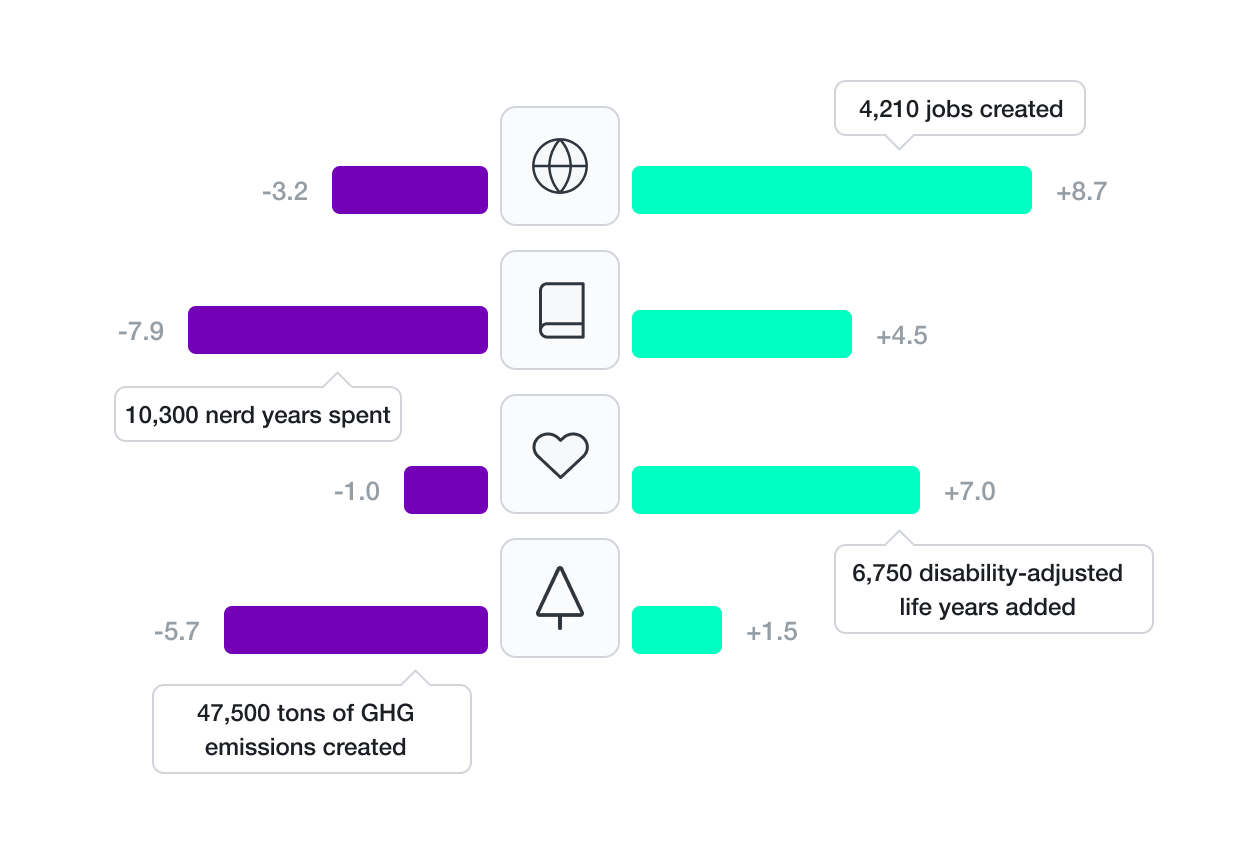
What is needed then? Big picture understanding of how a company’s core business really impacts the health of people, the environment, society at large and knowledge creation. According to science, not the company’s marketing department.
Very concretely, that means outlining what the most significant negative and positive impacts of a company’s business are. What their scale is. Whether they can realistically be improved while keeping the business alive. And what the corresponding big strategic implications for business owners, investors, employees and other stakeholders are.
Let’s take an example. Pepsi has been an ESG model citizen and a regular on the S&P ESG index for quite some years. It has won prizes on its sustainability reporting. But what does the company actually do? According to science its diligent reporting practices and incrementally improving on some of its impacts are not enough to compensate for its largest negative impacts: health issues from producing and marketing sugary drinks and other unhealthy foods to masses of consumers.
In ESG beauty pageants, the emperor often really has no clothes.
Currently laymen – consumers, employees, investors – are offered mainly two types of information about companies’ impact: sustainability reporting and marketing materials. Neither is designed to increase global understanding of how entire industries need to change.
Transparent data also serves companies themselves - at least the ones whose business holds some promise of being future-proof. Smart companies benefit from increased transparency to core business impact and find their ways of making good business based on facts that hold in the light of day.
In ESG beauty pageants, the emperor often really has no clothes.
For the past 5 years, Upright has been working hard to bring some common sense data to the ESG and sustainability mess. We are determined to dig out the big picture science that lets individuals - whether consumers, professional investors or business managers - grasp the reality of company impact.
Today marks the first step towards making that database fully public. Not just for asset managers and sustainability professionals, but for everyone. It is scary, as the science-based net impact is not always aligned with the company’s own communications - or even the image some of their executives hold true.
Our model is far from ready, and never will be quite ready. Every day new businesses are born, product innovations are made, and science learns new things about the various impacts industries have. But today we feel this data should have its place alongside the traditional ESG and sustainability information: not just how companies do what they do, but also what they do in the first place.
You are welcome to join the ride and help us spread the word!
Explore 10k company profiles for free:
May 25, 2023
Upright Project
Share: